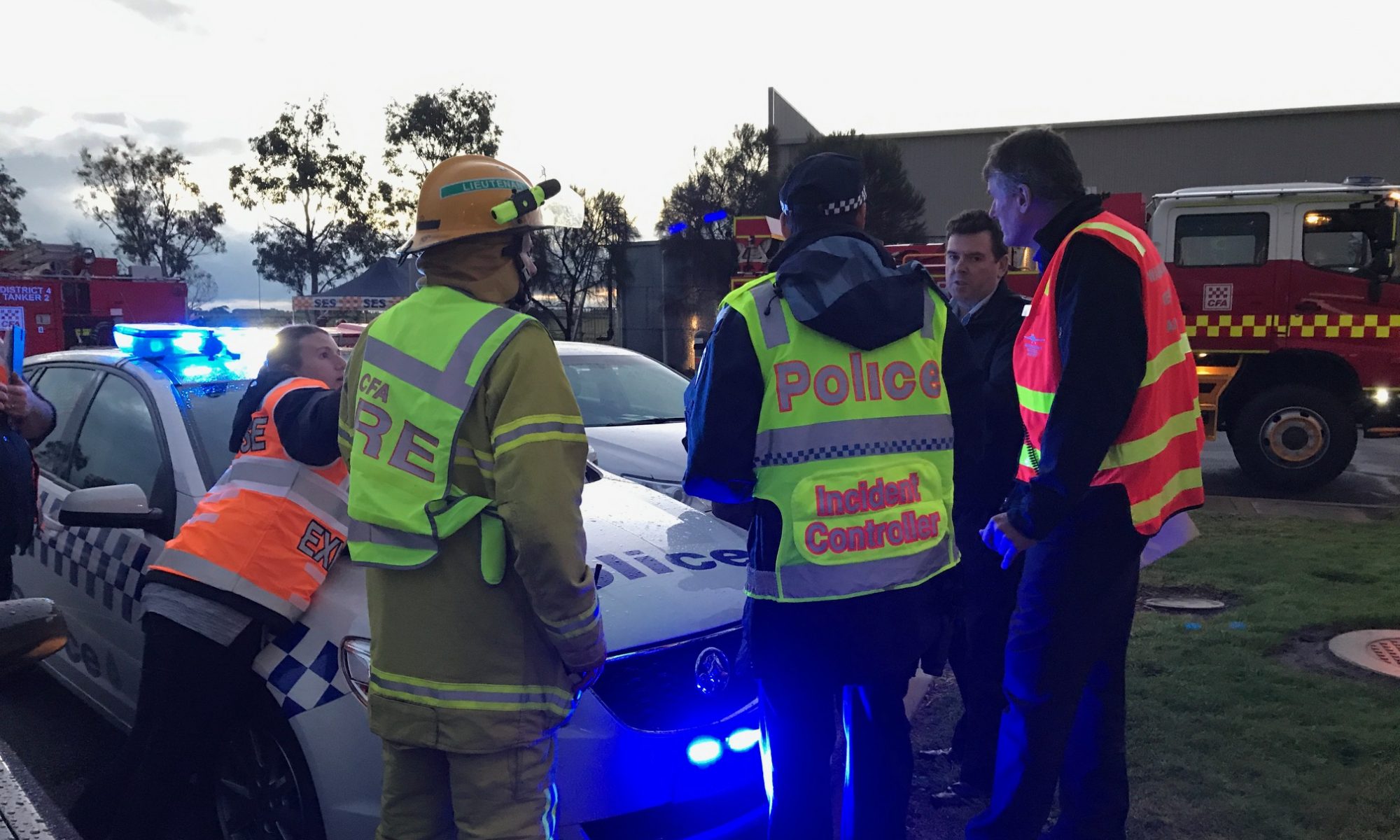
Mat and Sue have over 18 years experience working on the ground with communities following disasters and are leaders in developing community-led recovery initiatives. There success was recognised in 2018 with a Resilient Australia Award and an “Excellence in Emergency Communications” Award from EMPA for their innovative community led recovery strategy post the South West Fires.
Their experience in disaster recovery working with communities, local government, federal government and NGO’s is incomparable. The success of their strategies is the recognition that the community is the centre, the strategies are flexible and responsive and engagement supports the community to work together to build social capital.
Mat and Sue have used their lived experiences of working with communities before, during and after disasters to develop the Disaster Recovery & Community Resilience training course. This course is everything they wish they knew before taking on a role in recovery. The course is specifically designed to provide practitioners with practical skills and techniques to use in the field before, during and after disasters that will improve recovery outcomes for communities.
| Session content |
| Foundations of Recovery Understanding the recovery system in Australia provides recovery practitioners with a foundation on which to build successful recovery outcomes for communities. |
| Unpacking the National Principles for Disaster Recovery The National Principles of Disaster Recovery serve as the guiding framework for our recovery endeavours nationwide. Through practical tools provided during this course, you will be able to apply these principles into actionable insights, facilitating informed recovery planning and decision-making. Techniques can be used in the resilience building phase as well as post disaster. |
| Context: Using existing data to understand communities Successful recovery is based on an understanding of community context, with each community having its own history, values and dynamics. Learn how to interpret existing data to inform recovery planning. |
| Complexity: Trends and impacts Successful recovery is responsive to the complex and dynamic nature of both emergencies and the community. Disaster recovery is an inherently complex environment comprising an evolving emergency situation together with significant uncertainty and critical outcomes, and sometimes including injury or loss of life. Learn about the complexities that may affect each community post disaster and develop strategies and/or partnerships to reduce these effects. |
| Community led recovery: Listening, collaborating and implementing Successful recovery is community-centred, responsive and flexible, engages with community and supports them to move forward. Disaster-affected people, households and communities understand their needs better than any of the professional, government, non-government or corporate supporters. Learn about the strategies that were used to design and deliver an award winning community led recovery initiative that put community first. |
| Coordination and Collaboration: A seat at the table Successful recovery requires a planned, coordinated and adaptive approach, between community and partner agencies, based on a continual assessment of impacts and needs. Learn about who you could bring to the table to develop shared goals. |
| Communication: Is communicating with disaster affected communities different? The answer is yes! The system that we have developed has the potential to increase community engagement participation; build the capacity and capability of more people within communities and provide efficiencies for practitioners. Using our proven and award winning techniques you will will be able to effectively communicate and engage with disaster affected communities. |
| Capacity: Supporting self reliance Successful recovery recognises, supports and builds on individual, community and organisational capacity and resilience. Even the most profoundly impacted communities will still be able to actively contribute to their recovery. Learn how to harness the capacity of individuals and organisations to significantly improve recovery outcomes. |
| Wellbeing Recovery is a challenging sector to work in. Looking after yourself and your team is just as important as supporting the community through recovery. Learn strategies that will support you and your community to care for each other throughout the recovery journey. |
Outcomes
Success as a recovery practitioner requires commitment, knowledge and skills. This training will:
- Expose you to best practice and award winning recovery techniques
- Demonstrate award winning engagement and communication systems
- Provide you with opportunities to practice newly learnt skills in immersive interactive scenarios where you will use geographical areas within your own LGA
- Empower you to confidently support community led recovery
- Provide you with resources to add to your recovery toolbox
Who Should Attend?
We would recommend this course to anybody that works in recovery. Including, but not limited to the following:
- Commmunication Officers
- Community Recovery Officers
- Community Resilience Builders
- Community Recovery Managers
- Fire/Flood Recovery Managers
- Community Engagement Officers
- Community Development Officers
- Recovery Officers
- Recovery Workers
- Community volunteers working in recovery
- Community Recovery Committee members
Delivery method
Our training is delivered through reality-based training, simulations, practical scenarios, case studies and problem-based learning where lived experiences are shared to enhance participants learning experience. During our training we share real life experiences, combined with best practice research, to ensure you are provided with current information, strategies and ideas.
Trauma Informed
Importantly, our organisation uses a trauma informed approach to our work, acknowledging that an individual is more likely than not to have a history of trauma. By appreciating that discussing disasters may trigger a memory of previous trauma we provide participants with details about the early signs of a triggering event and provide strategies to assist participants experiencing a triggering event.
Learning materials
Each participant will be provided with:
- A training folder
- A workbook
- A bag
Course outline
Click here to view the course outline.
 The Six C's