I was Deputy Strike Team Leader for Strike Team 0703 deployed to Gippsland one year ago today.
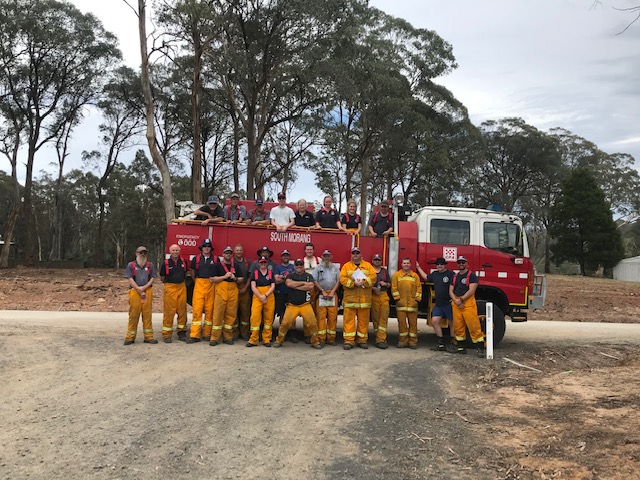
A Strike Team is usually formed from one CFA district. Unusually ST0703 was made up from volunteers across South West, Victoria. The team ranged in age from 18 to 75 years and each bought with them diverse skills and life experiences. There was a mixture of men and women, some with extensive firefighting experience and for some it was their first time away.
To highlight the diversity; the team was made up of Vietnam Veterans, tilers, chemical engineers, optometrists, retired airforce staff, university students, emergency management specialists, people from local government, retired metropolitan police members from the UK, diesel mechanics and logistic managers from multi national companies. This diversity demonstrates what makes a strike team so special. You would never meet such a varied group of people if not for their commitment to help others in their time of need.
This is my story:
This was my fourth deployment over the 2019/2020 summer season. I had already been deployed to NSW to one of the largest fires in Australian history; the Mt Gopsers Fire, led teams into Budj Bim twice and watched along with the nation the devastation caused to the communities in and around Mallacoota and the broader communities of Gippsland.
Due to the scale of the fires burning across Gippsland crews were still being deployed in early 2020 and our team flew out on 31 Jan. Our team departed from three different airports in South West Victoria on four different planes all heading to Cooma, NSW. We were originally heading for Swifts Creek but the smoke was too thick for us to land so Cooma was our destination. If you learn anything from going away with CFA it’s to be flexible!
The temperature on our day of departure was in the high 30C’s and the plane was tiny with no air conditioning. I was sitting on the tarmac at the Warrnambool Airport in this tiny plane full of people I hadn’t met before in the heat and I was humbled by their selfless act of leaving their families to help others they had never met. Many of them had, like me, been deployed multiple times over the season and yet responded to the call once again. But for some it was their first major deployment. In the tight confines of the plane we started to chat to the person squashed in beside us.
After a quick refuelling stop at the Moorabbin Airport we headed for Cooma. The heat had not abated and with no air conditioning we hoped for a quick take off to continue our journey. Flying over kilometres of burnt forest was our first introduction to the devastation caused by these fires. However, the worrying sight were the active fires still burning. From that height, everywhere we looked we saw fires with smoke plumes extending high into the atmosphere.
I’m not a fan of small planes and was excited to see the airport at Cooma. We were the last plane to land and we met up with the rest of our crew of 25 on the bus. For most of the two hour bus trip to Cann River we travelled through smoke and burnt forest arriving early in the evening.
The Cann River recreation reserve had been set up as a base camp for firefighters and to our delight we could see that our tents were already set up. As we left the bus the first thing I noticed was that the air was thick with smoke and ash was falling from the sky. But this was home for the next three nights.
The temperature remained into the low 30’s well into the evening and after getting all our gear off the bus we all headed to the Cann River pub for dinner. It was quite eerie walking through the town – there were no people and no cars, the town was pretty much deserted except for fire crews and some local business owners. Oh and ash was still falling from the sky.
After dinner we headed back to base camp. The air conditioned hall provided some respite but on arrival one of our firefighters was unwell and an ambulance was called. I stayed with him until the Bush Nurse arrived. He was taken into town for further tests. Finally at 11pm after a quick shower in a transportable shower unit with bugs flying around me I was ready for bed. I made my way to my tent and opened all the flaps in the hope that some cool air would make its way in and tried to get some sleep. However, the unusual sounds of the camp and the heat made it impossible. Zips were opening and closing, tents were flapping in the hot breeze, other firefighters were walking past in thongs making the iconic flip flop sound – I found it hard to sleep. All these sounds were coupled with the smell of smoke. After finally going to sleep I was woken with the arrival of the fire trucks from the swing shift in the early hours of the morning. It was still hot and I found it hard to go back to sleep. I heard snoring from a nearby tent and was very jealous that they had managed to get some sleep!
6am finally came around and we headed out to the fire ground. This was after grabbing some breakfast, organising food, water and ice for the strike team, checking on the firefighter that was sick the previous night, crewing the trucks and finding our bus.
The journey took two hours and we arrived in Bendoc which was under an Emergency Warning. Briefings were held and maps distributed, crews checked their trucks and we headed onto the fire ground. It was 40C.
I find the first day on a fire ground an assault on all my senses. The smell of smoke invades my sinuses, the devastation all around me is all encompassing, the noise of helicopters working overhead is reassuring but nerve wracking at the same time. The heat from the sun coupled with the heat from the fire together with the ferocity of the wind speed made our first day challenging.
In the forward command vehicle with the Strike Team leader the constant radio chatter filled the cabin. I had to concentrate on what was being said on the multiple radios listening for important information regarding fire behaviour, wind direction and issues that could affect the safety of the crews.
For the most part of the day we were working across the VIC NSW border with NSWRFS, DELWP/FFMVic and the Canadian contingent. We also had some help from our friends in the sky. The conditions escalated in the afternoon as fires around us built in size. Crews worked hard all day suppressing the fire and finished the exhausting day focussing on asset protection. We met some exhausted community members who had been preparing for the fire to impact their property for weeks. The constant threat was etched in their faces. Although they were well prepared they wished the fire would just come and burn through their property, that way it would be over and they could move forward.
We worked with property owners well into the night. Unfortunately or fortunately for the community the fire subsided and once again they were at the mercy of the weather deciding which direction the fire would travel.
Our shift was finally over and we headed back to Bendoc arriving into town at 11pm. Exhausted, we all boarded the bus for our two hour bus trip back to Cann River. Our journey included dodging wildlife feeding on the roads edge. It was lovely to see that some wildlife had survived the fires but it it made our trip slow and long. However the long trips to and from the fire ground provided ample time to chat. Those conversations, to and from the fire ground, are what makes you volunteer. Conversations usually focus on life, children and family but interestingly tonight’s conversation during the last leg of the journey was about women firefighters and toilets! A male volunteer asked me what he should do to help the females within his group back at home. This conversation went for an hour and I’m happy to say the next day he implemented our plan on the fire ground and it proved to be very successful for both the males and females! You never know what you are going to learn or share during these trips and I’m hopeful that this small strategy will help his group well into the future.
Unfortunately as we were nearing Cann River River a firefighter was sick. We took care of him and continued our journey arriving in Cann River at 1am. I was desperately looking forward to having a shower and getting into bed but as I was getting my gear off the bus a firefighter collapsed at my feet. He was really unwell and I honestly thought he wasn’t going to make it. The ambulance was called and I sat with him until it arrived. It was the longest 40minutes of my life! The bush nurse arrived and confirmed our diagnosis- he was very unwell. He was taken to the bush nursing centre for emergency treatment. At 3am I was finally able to have a shower and I headed back to my tent with one small hiccup. I couldn’t find my tent! My tent was tent 17 and I had to count from 1-17 down the long line of tents. Under normal circumstances I find it easy to count from 1 -17 but it had been a really long day and twice when I was halfway down the line of tents I forgot what I was up too and had to start at the beginning. The third attempt at counting I stood in front of what I believed to be my tent – I paused and started to unzip the opening. Nope! Not my tent. A voice yelled out “Wrong tent” I was so embarrassed!! I had missed by one!
After apologising profusely to the tent occupant I unzipped my tent and in I went only to come face to face with a very large praying mantis! We made a quick agreement that he could stay in my tent if he kept off my face. Happy to say he kept to his side of the bargain.
I slept well, in fact I got cold and pulled up my blanket. It was a stark contrast to the night before as a change was coming through. I woke at 6am. Crap! Not enough sleep!!
Lunch, water, ice and foam had to be organised for our second day on the fire ground. I checked on the sick firefighter who had just returned after extensive treatment and I jumped on the bus for another two hour bus trip out to Bendoc. On arrival crews again checked their trucks and equipment, we divided up the lunches and provided another briefing. This time we were headed to Bonang.
Conditions were vastly different today with a foggy mist mixed with smoke. The temperature was a much more comfortable 27C. We were tasked with a DELWP crew monitoring the fires edge and supported the Canadian crew who were felling hazardous trees.
Another dinner on the fire ground and back to Bendoc to get on the bus to Cann River. I was in bed by 11pm after scrounging a couple more blankets. I used four to keep warm and I slept well.
I woke in the morning and had a long hot shower and washed the smoke out of my hair. I was ready for home. One slight hiccup was that we didn’t have a movement order and we believed nothing had been organised. We had been requesting the arrangements as soon as we arrived on the Friday but due to a mix up at the ICC we hadn’t yet been notified of our return arrangements.
After many frantic phones calls we finally received our movement order that had us departing Cooma in two hours on an ADF flight. Cooma was two hours away and we didn’t have a bus to get us there.
After some lateral thinking I did a deal with a bus driver and we all boarded quickly to meet our ADF flight home.
Our bus driver didn’t quite comprehend our urgency to get to Cooma he was more concerned with providing us with a tour highlighting historical points along the way! As our departure time came closer I was concerned that the plane would have to leave before we got there. I can’t tell you how excited I was to see the ADF Hercules plane still waiting for us on the tarmac.
After a thorough safety briefing we were on board and departed Cooma for Hamilton and then on to Avalon.
We landed in Hamilton after a smooth flight. Although the Hercules was nothing like a commercial flight it was much more comfortable than the tiny plane we flew up on. The ADF crews were very kind and offered us the opportunity to visit the pilots and look in the cockpit. After landing we exited via the rear cargo door of the plane with our gear. Within a few minutes we watched the Hercules take off with the remaining crews heading to Avalon Airport. A bus was waiting for us and after another hour trip I was finally home.
When you go away on a strike team you make bonds with people that never break. It’s a shared experience that will link you forever. And if by chance you happen to meet again on another strike team it’s like catching up with family.
 The Six C's